
How to Analyze a Fix-and-Flip Deal (Free Flip Calculator)
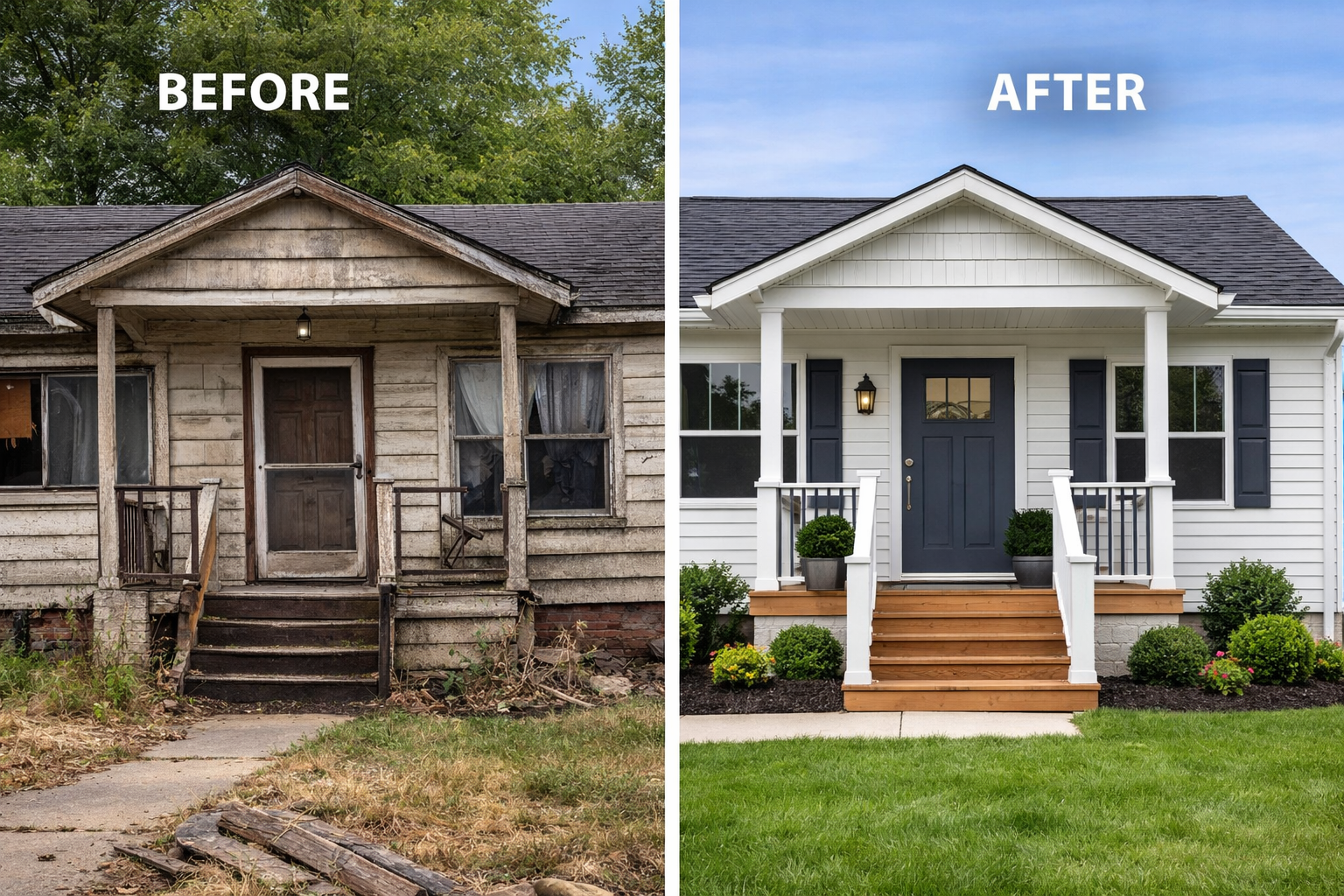
Example of a typical fix-and-flip transformation, from distressed condition to fully renovated.
If you’re thinking about flipping a property, one of the most important questions is simple:
What’s the most I can pay and still make money?
A lot of deals look great at first. But once you factor in renovation costs, holding expenses, and selling costs, the numbers can change quickly.
That’s why I built a flip calculator—to help you work backward from the resale price and determine a realistic purchase price before making an offer.
Why the Purchase Price Matters
In a flip, your profit is made when you buy—not when you sell.
If the purchase price is too high, there’s very little room for error. Unexpected repairs, longer timelines, or shifts in the market can all eat into your margin.
Running the numbers ahead of time helps avoid that.
What the Flip Calculator Does
The calculator starts with your estimated resale value (ARV) and works backward to calculate your maximum allowable offer.
It factors in:
Renovation costs
Selling expenses (commissions and closing costs)
Holding costs (taxes, insurance, utilities)
Financing costs
Your target profit
A contingency buffer
Instead of guessing, you get a clear number to guide your decision.
Simple vs. Detailed Analysis
There are two ways to use the calculator depending on how far along you are in the deal:
Quick Analysis
Best for:
reviewing deals quickly
making initial offers
screening multiple opportunities
Detailed Analysis
Better for:
tightening your numbers
understanding where your money is going
evaluating deals with smaller margins
The 70% Rule (And Its Limits)
You’ve probably heard of the 70% rule:
Offer = 70% of ARV – Repairs
It’s a useful quick check, but it doesn’t account for:
actual holding costs
financing
your specific profit goals
That’s why a more detailed calculator tends to be more reliable.
For Rental Properties Too
If you’re holding instead of flipping, the tool also includes rental analysis features that help you estimate:
monthly cash flow
total investment
return on investment
This makes it useful whether you’re flipping or building a rental portfolio.
Who This Is For
This calculator is useful if you are:
evaluating a potential flip
comparing multiple deals
trying to avoid overpaying
just getting started in real estate investing
Try the Calculator
You can access the calculator here:
Run the numbers before you make an offer—it’s one of the simplest ways to avoid a bad deal.
Final Thought
Most deals don’t fail because of bad intentions—they fail because of bad assumptions.
Taking a few minutes to run the numbers can make a big difference.
Michael Johnson
Realtor / Appraiser
630-689-6655
MikeJohnson.Realtor@gmail.com
Disclaimer: This calculator and analysis are provided for informational purposes only and do not constitute an appraisal, comparative market analysis, or guarantee of value or investment performance. Results are based on user inputs and assumptions that should be independently verified. Market conditions, property condition, and unforeseen factors may impact actual results.